
Three-Phase Power Installation in Laurencekirk
Ask James about a three-phase supply you already have, or about what new equipment will need electrically. He assesses the installation and tells you which work sits inside the property.
Call 01561 400193James answers · 24/7 for emergencies- Local, Laurencekirk based electrician
- Proposed load assessed first
- Network operator work explained
- Costs agreed before work begins
 18th EditionBS 7671 Qualified
 City & Guilds2382-22, Level 3
 Fully InsuredFor Electrical Work
 RAF ElectricianElectrical Engineer
 Ex-Retained FirefighterFire & Rescue Service
Three-Phase Supplies in Laurencekirk, Aberdeenshire
Laurencekirk Sparks is James Leslie, who is based in Laurencekirk. Around here, three-phase work usually means a farm, steading or grain store in the Howe of the Mearns, or a workshop or unit on the town’s small industrial estate. He covers Laurencekirk, the Mearns and south Aberdeenshire, and over the border into Angus, within an approximate 40-mile radius.
James is the one contact for the load assessment, the internal installation, the testing and the records. He also does agricultural electrical work on steadings and sheds, traces grain dryer electrical faults and quotes EV charger installation on a farm or business supply. If the incoming connection itself has to change, he explains which parts belong to the network operator before any work is agreed.
5/5 on Google Reviews
“He took great care over the work (even used a spirit level to make sure the cooker was sitting right!) and was very reasonably priced. We are new to the area and struck lucky finding a reliable, responsive electrician.”
“Great service, fast response and problem fixed quickly”
“Great service highly recommended.”
“Jamie arrived within 15 minutes of my call and had the power back on about 10 minutes later.”
“James was very polite and sent over the quote immediately after the call and came out the same day in the early evening.”
“He couldn't of been more helpful and still only took what he quoted for, even though it was a bigger job than expected. Definitely recommend.”
“Arrived within an hour of my call, as he said he would. Fixed the problem same afternoon, and rate was extremely reasonable!”
“They also give decent price for the job and the work done will be using James again, he is also very polite and very helpful too me.”
“Fast response during a weekend, put in a temporary fix so we got power back. Excellent service.”
“Very professional and courteous. Highly recommend him.”
“James answered my call late at night and went to my property to investigate even though I had never used him before.”
Why Choose Laurencekirk Sparks for Three-Phase Electrical Work?
- Laurencekirk Sparks handles three-phase electrical work across Laurencekirk, Aberdeenshire
Advice on a three-phase supply you already have and on what new equipment needs electrically. James is based in Laurencekirk and works for homes, farms and businesses in the Mearns, south Aberdeenshire and over the border into Angus, within approximately 40 miles.
- An 18th Edition qualified electrician working to BS 7671
Motor starters, protective devices and local isolation have to suit the equipment and the environment it runs in. Electrical testing and the appropriate installation records are part of the agreed scope.
- You speak to James Leslie himself, not a call centre
James is based in Laurencekirk and has 40 years of electrical engineering experience. He is a former RAF electrical engineer and former retained firefighter. Small jobs are welcome, the work is explained clearly and costs are agreed before work begins.
- Laurencekirk Sparks is fully insured and based in the town
Public liability cover applies across domestic, commercial and agricultural properties, and the cost is agreed before any work begins.
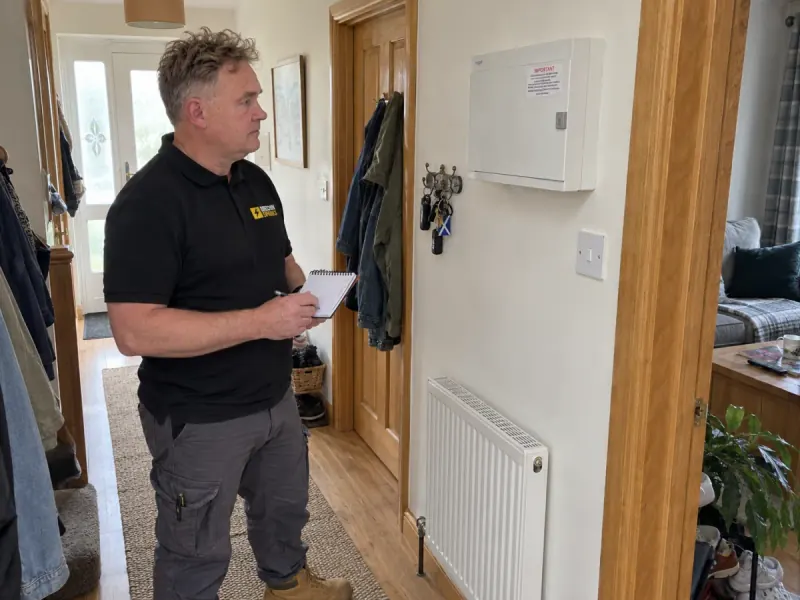
Before you order equipment
Do I Need Three-Phase Power?
It depends on the equipment’s requirements and the load it will put on the supply. A single-phase supply suits most homes, while workshops, farms and some chargers or heat pumps may need three-phase or more incoming capacity than the existing supply has spare. James assesses the existing installation and the equipment’s requirements before advising which work falls within the property and which sits with the network operator.
Three-phase supplies for farms and businesses
New machinery or changes to a workshop may need an assessment of the available supply and distribution equipment. James discusses the proposed load, existing installation and equipment requirements before agreeing internal electrical work.
Motor circuits, protection and isolation
Motor starters, protective devices and local isolation must suit the equipment and operating environment. Investigation may be needed before replacement components are selected.
Incoming capacity and network operator work
A larger incoming supply or a new three-phase connection requires the network operator’s assessment. Costs, approvals and timescales need to be established before assuming machinery can be connected.
Planning work around your operations
Provide equipment ratings, operating times, any drawings and details of critical loads. Agree planned shutdowns, safe access and coordination with equipment suppliers.
What Three-Phase Electrical Work Covers
Advice and installation work for farms, workshops and business premises, from the distribution equipment inside the property to the parts of the project that sit with the network operator.
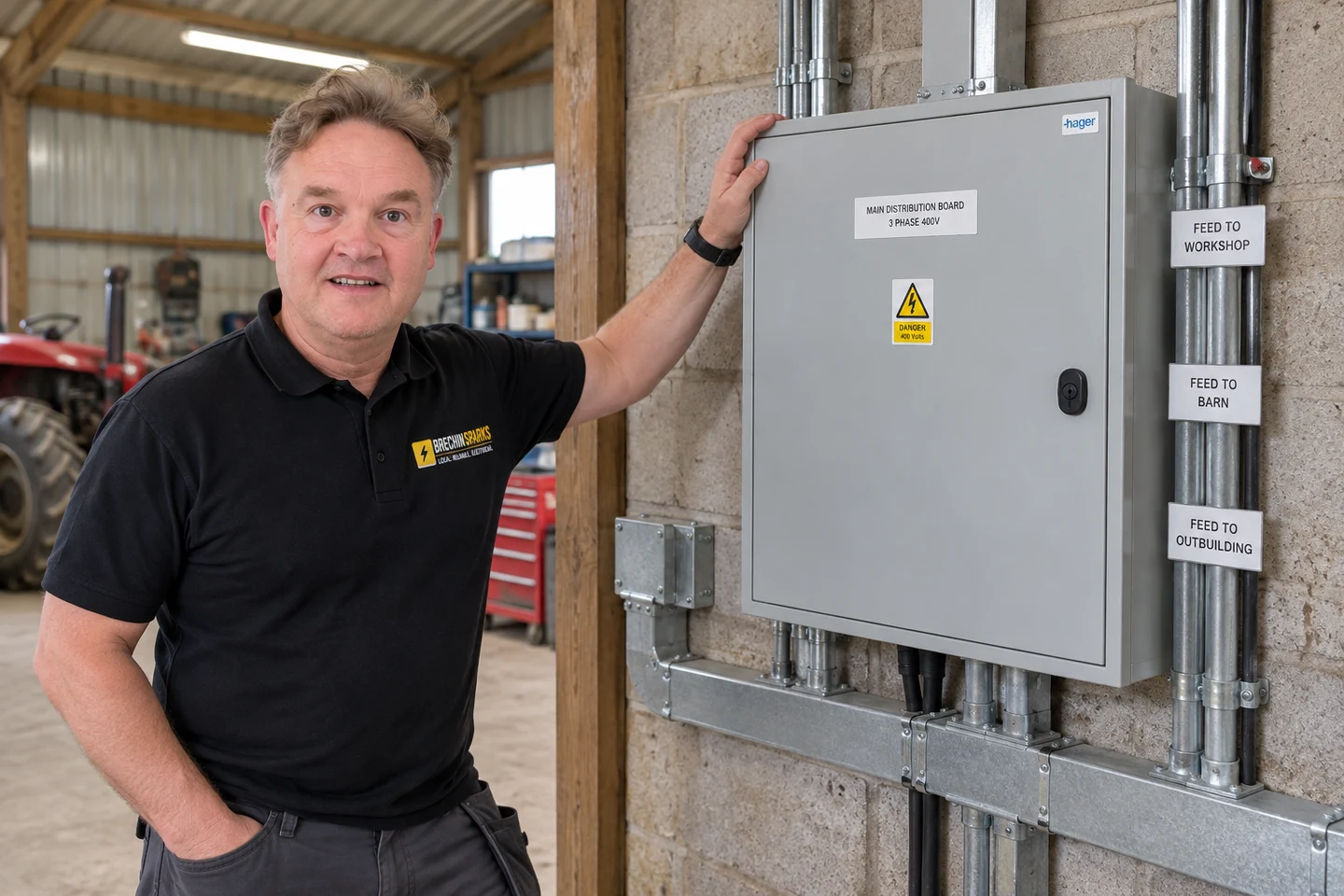
Three-phase supplies for farms and businesses
New machinery or changes to a workshop may need an assessment of the available supply and distribution equipment. James discusses the proposed load, existing installation and equipment requirements before agreeing internal electrical work.
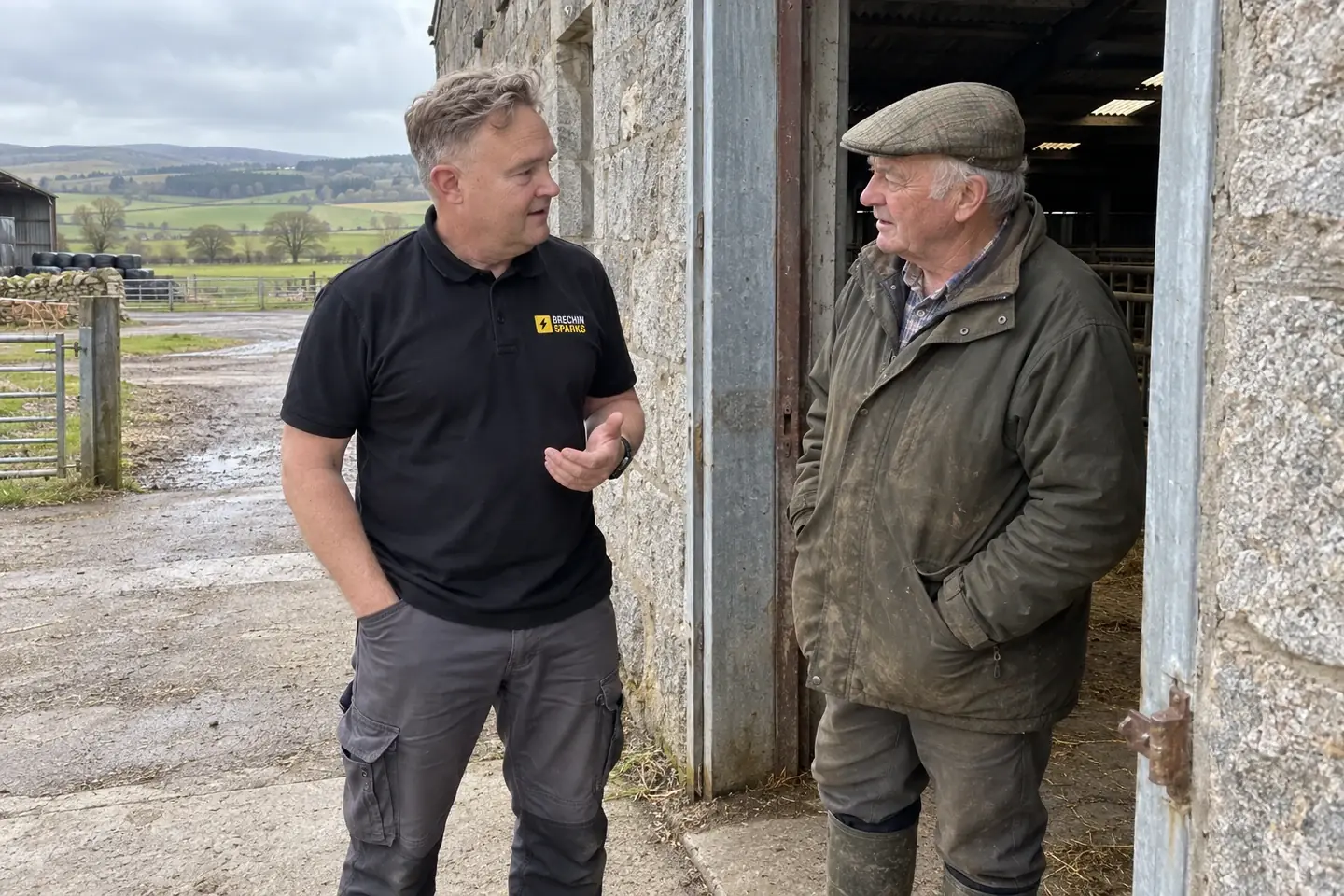
Motor circuits, protection and isolation
Motor starters, protective devices and local isolation must suit the equipment and operating environment. Supply faults, connection problems and control faults can have similar symptoms, so investigation may be needed before replacement components are selected.
Incoming capacity and network operator work
A larger incoming supply or a new three-phase connection requires the network operator’s assessment. The network connection, metering and internal installation are distinct parts of the project. Their costs, approvals and timescales need to be established before assuming machinery can be connected.
How Is Three-Phase Work Priced?
No two three-phase jobs are alike, so the price is set from the equipment and the existing supply rather than from a fixed table.
Quoted after assessment
Quote agreed after assessment. The equipment, access, investigation needed and extent of installation or repair affect the price.
Costs agreed before work begins
James explains the proposed work and any additional costs before you agree to proceed.
Network operator work is separate
Provide equipment ratings and details of the current supply. Changes to the incoming network connection may require the network operator and are separate from internal electrical work.
Describe the equipment and the current supply and James will quote the work. See the full guide to electrical work prices for other jobs.
What Does Three-Phase Electrical Work Involve?
From the first conversation about the equipment to commissioning it on the new circuits, the work runs in this order:
- 1
Establish the load and equipment requirements
James discusses the proposed load, existing installation and equipment requirements before agreeing internal electrical work. Equipment ratings, operating times and details of critical loads set the scope.
- 2
Check the incoming supply and, where needed, the network operator application
The existing supply, metering and distribution equipment are assessed against the proposed load. Where a larger incoming supply or a new three-phase connection is needed, the network operator’s assessment and approval are a separate part of the project and need to be in place before assuming machinery can be connected.
- 3
Design the distribution and protection
Distribution boards, circuit protection, cable sizes and earthing are designed for the equipment and the operating environment, with motor starters, protective devices and local isolation chosen to suit each machine.
- 4
Install boards, circuits, isolators and starters
Planned shutdowns and safe access are agreed first. The distribution equipment, circuits, local isolators and motor starters are then installed, coordinated with equipment suppliers where a machine is being delivered or connected.
- 5
Test, commission with the equipment and certify
Each circuit is inspected and tested to BS 7671, the equipment is run up and checked on the new supply, and the appropriate installation records are issued within the agreed scope.
Planning Work Around Your Operations
Provide equipment ratings, operating times, any drawings and details of critical loads. Agree planned shutdowns, safe access and coordination with equipment suppliers. Electrical testing and the appropriate installation records are included within the agreed scope.
Milking, drying and production runs cannot always stop for an electrician, so the work is sequenced around the times the equipment is not needed. Where a machine is being delivered or connected, James coordinates with the supplier so the electrical work is ready when it arrives.
What to have ready
Equipment ratings, from the nameplate or the supplier’s data sheet
Operating times, and when a shutdown can be planned
Any drawings of the site or the installation
Details of critical loads that cannot be interrupted
On completion
What you are left with
Electrical testing and the appropriate installation records are included within the agreed scope. These are the documents to expect.
Electrical Installation Certificate (EIC)
Issued for new three-phase circuits, distribution boards and sub-mains, recording the inspection and test results against BS 7671 (18th Edition). Any applicable building warrant or approved certification requirements are assessed separately.
Distribution board schedule
A schedule of circuits on the board naming each circuit, its protective device and what it feeds, so a machine can be isolated quickly and the next electrician knows what they are looking at.
Network operator correspondence
Where the incoming connection has been changed, any application, approval or connection paperwork from the network operator is kept with your records, as the network connection and metering are separate from the internal installation.
Three-Phase Electrical Work Across Laurencekirk, Aberdeenshire
Three-phase work for farms, workshops and small industrial units from a base in Laurencekirk, Aberdeenshire, Scotland, across the Mearns, south Aberdeenshire and into Angus within an approximate 40-mile radius. Give James your postcode to confirm availability.
- Laurencekirk and AB30From the High Street to Blackiemuir Avenue and Conveth Mains, including the industrial estate. Our base, so usually the quickest to arrange.
- Fettercairn, Auchenblae and FordounFarms, steadings and grain stores around the Mearns villages and the land between them, including Marykirk and Luthermuir.
- Montrose and EdzellOver the Angus border: motor circuits and supply assessments for workshops and business premises.
- Stonehaven and InverbervieUp the A90 and along the coast: enquiries welcome for workshops, units and rural properties.
- Elsewhere in Aberdeenshire or AngusCall with your postcode to check coverage within the approximate 40-mile service area.
Frequently Asked Questions About Three-Phase Electrical Work
Can’t see your question?
James answers the phone himself and will tell you straight away whether he can help.
Call 01561 400193Can you arrange more incoming power for new machinery?
James can discuss the installation requirements. Any change to network capacity or the incoming connection needs the relevant network operator's assessment and approval.
What is the difference between single-phase and three-phase?
A single-phase supply delivers power on one live conductor and a neutral; a three-phase supply delivers it on three live conductors, which lets it carry a larger load and run three-phase motors directly. Most homes have a single-phase supply, while farms, workshops and industrial units with heavier machinery are more likely to have three-phase. Which one you have is usually clear from the incoming supply head and meter, and James confirms it during the assessment.
Can a house get three-phase?
Sometimes. It is possible where the network can supply it, and the network operator decides whether and how a connection can be made. Any change to network capacity or the incoming connection needs the relevant network operator's assessment and approval. James can discuss the installation requirements and explains what work falls within the property.
Who arranges a three-phase supply — you or the network operator?
The network operator provides the connection and the metering; James carries out the electrical work inside the property. The network connection, metering and internal installation are distinct parts of the project. Changes to the incoming network connection may require the network operator and are separate from internal electrical work. James explains which parts of your project sit where before any work is agreed.
Can three-phase machinery run on single-phase?
Sometimes, with a converter, but not always. Whether it is workable depends on the machine, its motor and how it is used, and a converter is not the right answer for every load. James assesses the equipment and the existing supply before advising whether a converter, a new circuit or a change to the incoming supply is the better route.
Do I need three-phase for an EV charger or heat pump?
Not necessarily. Many chargers and heat pumps run on a single-phase supply, but some equipment and larger installations are specified for three-phase or need more capacity than the existing supply has spare. James assesses the equipment’s requirements together with the existing installation before advising.
Get your three-phase electrical work quote
Send the equipment ratings and details of the supply you have now. James assesses the installation and explains which work falls within the property.
James aims to reply within one hour, 8am–6pm.