
Storage Heater Repairs & Upgrades in Laurencekirk
Laurencekirk Sparks carries out electrical repairs, element replacements and off-peak circuit testing on storage heaters, and installs modern High-Retention Storage Heaters, across Laurencekirk and the Mearns. Speak to James Leslie directly about improving your home heating efficiency.
Call 01561 400193James answers · 24/7 for emergencies- Repairs, element swaps and off-peak circuit testing
- High-retention storage heater upgrades
- Dual-supply wiring checked before an upgrade is agreed
- Costs agreed before work begins
 18th EditionBS 7671 Qualified
 City & Guilds2382-22, Level 3
 Fully InsuredFor Electrical Work
 RAF ElectricianElectrical Engineer
 Ex-Retained FirefighterFire & Rescue Service
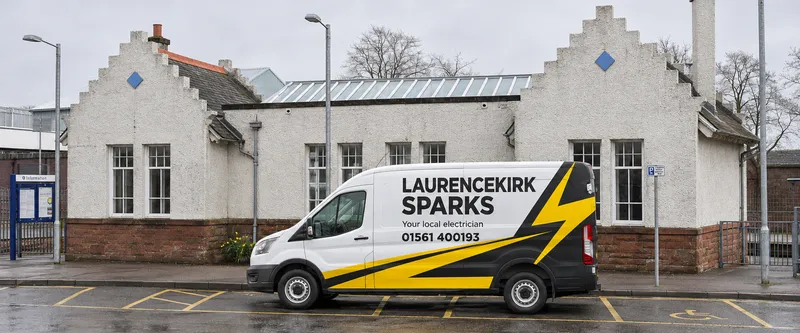
Storage Heater Repairs Across Laurencekirk, Aberdeenshire
Laurencekirk Sparks is James Leslie, based in Laurencekirk. Off-peak storage heating is found in flats, including those above shops on the High Street, in older houses in the town and in rural homes without gas across the Howe of the Mearns. James covers Laurencekirk, the Mearns and south Aberdeenshire, and over the border into Angus, within an approximate 40-mile radius.
The heater, its wall isolator switch and the off-peak circuit feeding it are all part of the same job, so one visit covers the fault finding, the repair or replacement and any dual-supply wiring. For hot water, not heating, see immersion heater repairs. Heating timers and app-controlled thermostats come under smart home controls. If the board itself needs an off-peak way added, that is a separate consumer unit upgrade.
5/5 on Google Reviews
“He took great care over the work (even used a spirit level to make sure the cooker was sitting right!) and was very reasonably priced. We are new to the area and struck lucky finding a reliable, responsive electrician.”
“Great service, fast response and problem fixed quickly”
“Great service highly recommended.”
“Jamie arrived within 15 minutes of my call and had the power back on about 10 minutes later.”
“James was very polite and sent over the quote immediately after the call and came out the same day in the early evening.”
“He couldn't of been more helpful and still only took what he quoted for, even though it was a bigger job than expected. Definitely recommend.”
“Arrived within an hour of my call, as he said he would. Fixed the problem same afternoon, and rate was extremely reasonable!”
“They also give decent price for the job and the work done will be using James again, he is also very polite and very helpful too me.”
“Fast response during a weekend, put in a temporary fix so we got power back. Excellent service.”
“Very professional and courteous. Highly recommend him.”
“James answered my call late at night and went to my property to investigate even though I had never used him before.”
Why Choose Laurencekirk Sparks for Your Storage Heaters?
- Laurencekirk Sparks fixes and upgrades storage heaters across Laurencekirk, Aberdeenshire
Electrical repairs, element replacements, off-peak circuit testing and modern High-Retention Storage Heater installations in homes, flats and rental properties. James is based in Laurencekirk and travels within an approximate 40-mile radius.
- BS 7671 work from an 18th Edition qualified electrician
Before an installation is agreed, the dual-supply wiring is checked against the manufacturer’s wiring requirements and your tariff. Afterwards the circuit is tested and certificated.
- You talk to James Leslie, never a call centre
James is a former RAF electrical engineer and former retained firefighter with 40 years of electrical engineering experience.
- Laurencekirk Sparks is locally based and fully insured
Public liability insurance is in place for domestic, commercial and agricultural properties. Quotes are clear and agreed before work starts.
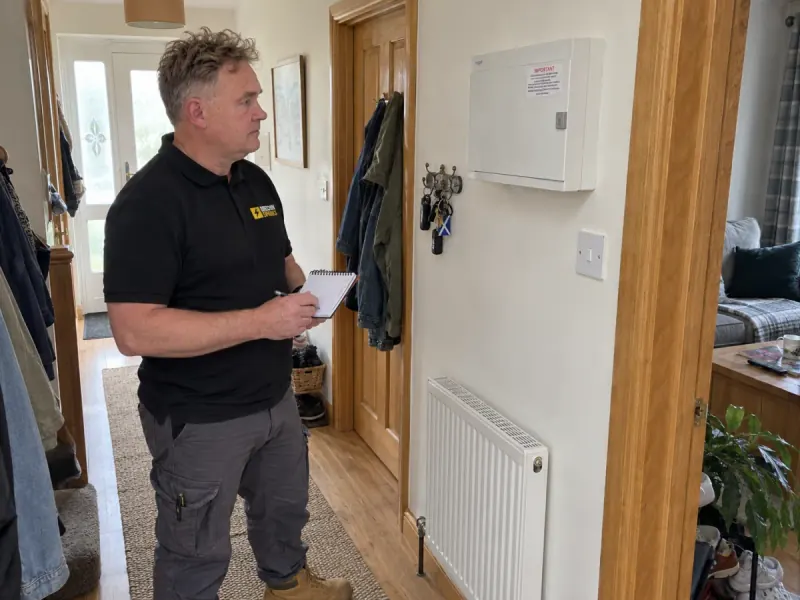
Repair or upgrade
Are Modern High-Retention Storage Heaters Cheaper to Run?
High-retention heaters feature improved insulation and charge controls that can reduce wasted heat. Savings depend on the heater being replaced, electricity tariff, room heat loss and how the controls are used. Electric storage heating uses off-peak electricity to charge thermal storage material. Older heaters can release heat before it is needed. Modern High-Retention Storage Heaters (HHRSH) offer improved insulation and charge controls; running costs depend on the tariff, property and operating settings.
The heater being replaced
Older heaters can release heat before it is needed. How much of its charge your current heater loses during the day, compared with a high-retention unit, is what decides whether a change is worthwhile, and it differs from heater to heater.
Your electricity tariff
Storage heating only makes sense on a tariff with a genuine off-peak rate. Check your current tariff and off-peak hours before deciding; James checks the manufacturer’s wiring requirements and your tariff before agreeing an installation.
Room heat loss
A poorly insulated or draughty room loses heat whichever heater is fitted, so the same replacement can make a noticeable difference in one room and little in another.
How the controls are used
High-retention units automatically calculate daily charge needs and hold heat into the evening, but the input and output settings still need to suit how the room is used. James sets them with you at handover.
Signs a Storage Heater Needs Attention
Any of the following is a reason to have the heater looked at. Whether it is repaired or replaced depends on what is found once the heater and its circuit are checked together.
Not heating at all
A heater that stays cold after its off-peak period may have a failed element, a tripped thermal cut-out, a broken wall switch isolator or no off-peak supply reaching it. Check the wall switch is on and the input control is turned up before calling.
Heating at the wrong time
Warm during the day and cold by the evening can mean the heat is escaping early or the output control is set open. A heater charging outside its off-peak hours can point to the timer or the off-peak switching rather than the heater itself.
Tripping the circuit
A storage heater that trips its breaker or fuse when it starts to charge can have an element or wiring fault. Leave it switched off at the wall isolator and arrange an inspection rather than resetting it repeatedly.
Cracked casing or a burning smell
A cracked or damaged casing, scorch marks or a persistent burning smell need attention before the heater is used again. Older storage heaters contain heavy thermal bricks and some legacy units contain asbestos insulation. Do not open or dismantle a very old unit yourself.
Repair the Heater or Replace It?
Two routes for a storage heater that has stopped doing its job. Which suits you depends on the fault, the age of the unit and whether the wiring can support a modern replacement.
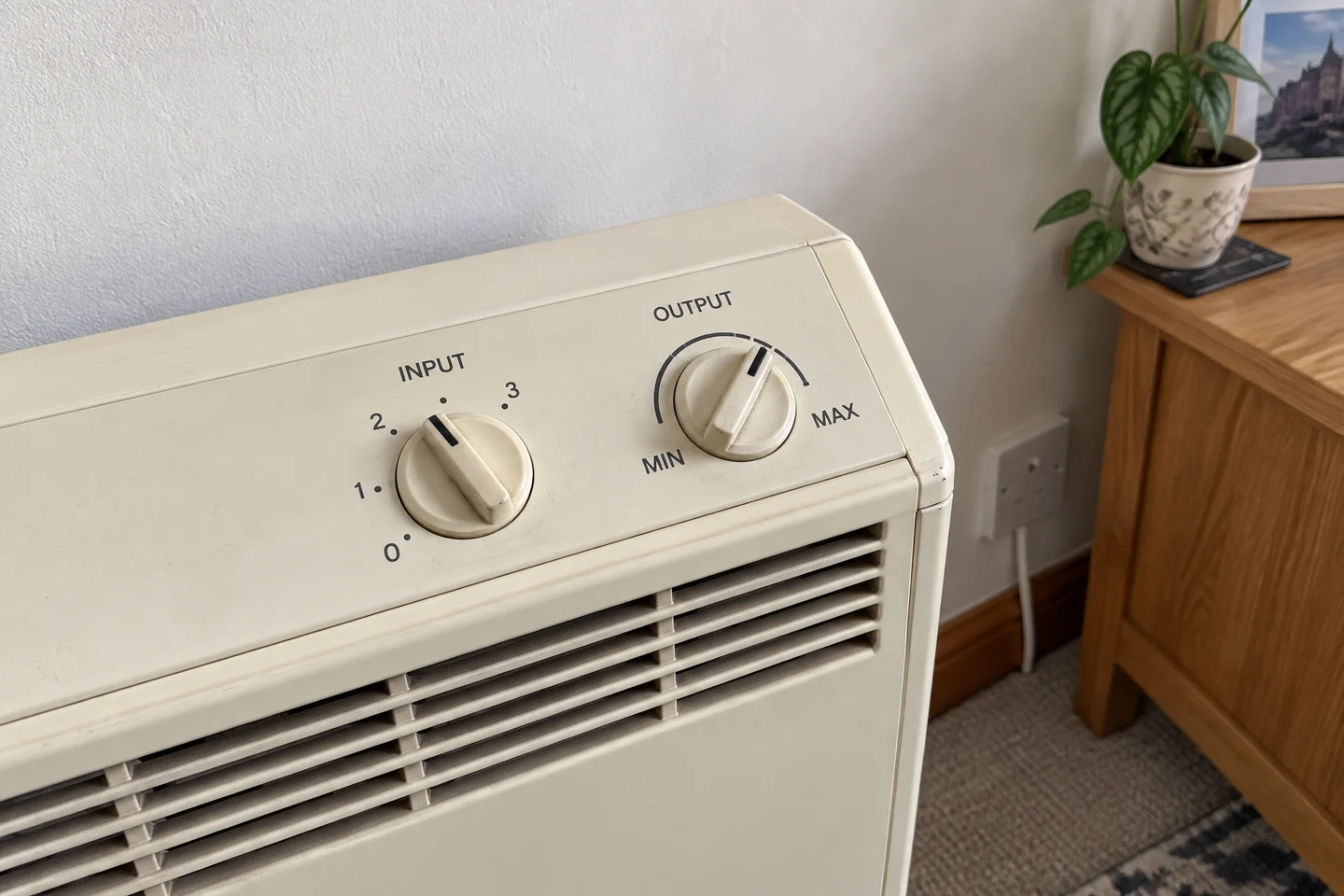
Option one
Repair the existing heater
Fixing dead heaters, replacing failed heating elements, renewing faulty thermal cut-outs, and repairing broken wall switch isolators.
Elements, thermal cut-outs and wall isolators are the parts that can be replaced on many models. Where a matching part is available, a repair keeps the existing heater and its wiring in place. Share the heater brand and symptoms with James.
Best when: the heater is a sound, reasonably modern unit with a single failed part and a matching replacement part is available.
Option two
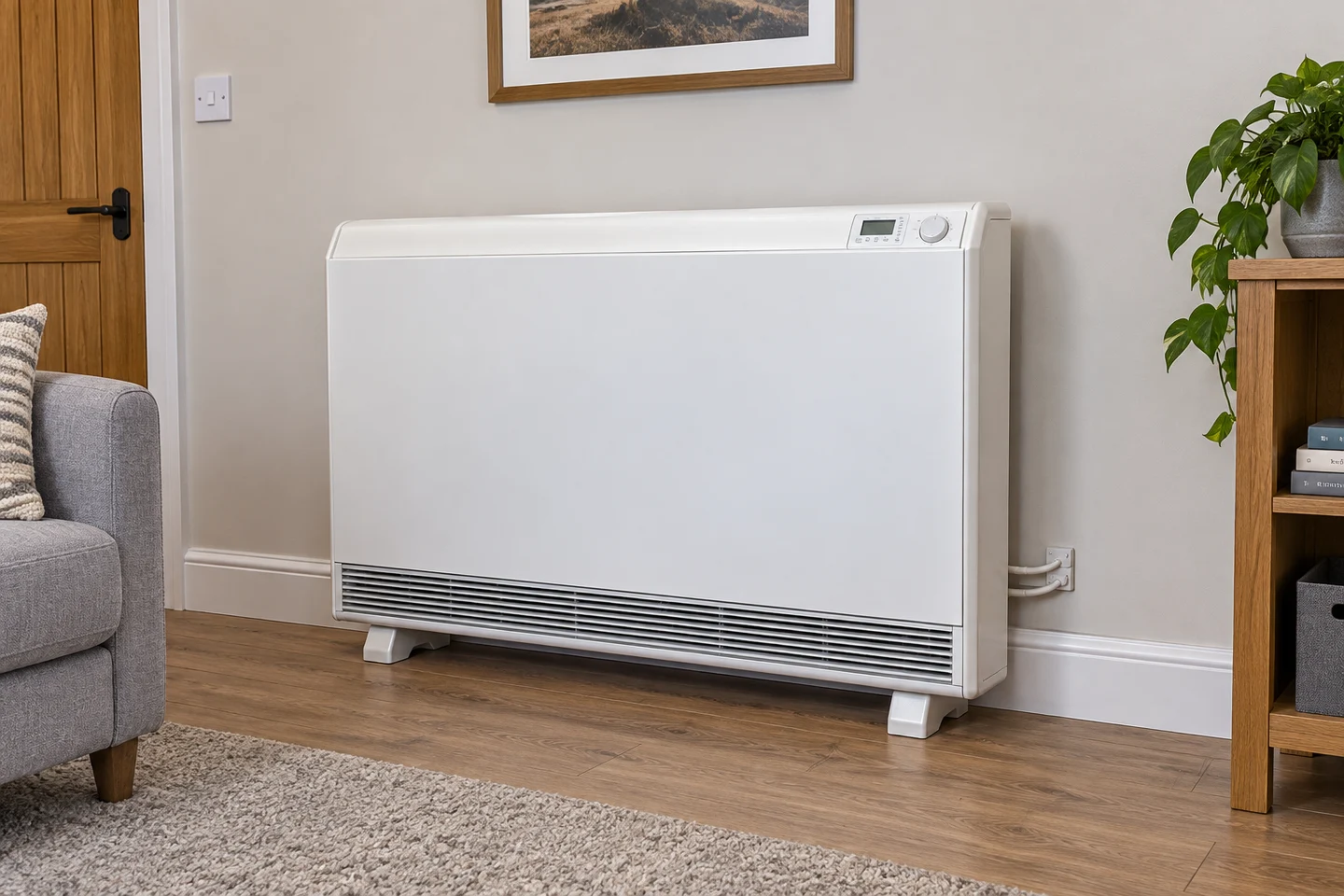
Replace with a high-retention heater
Replacing old, bulky heaters with modern Dimplex Quantum or similar high-retention units that automatically calculate daily charge needs and hold heat into the evening.
High-retention heaters feature improved insulation and charge controls that can reduce wasted heat. Savings depend on the heater being replaced, electricity tariff, room heat loss and how the controls are used.
Best when: the heater is an older unit that releases heat before it is needed, parts are no longer available, or more than one part has failed.
Off-peak dual-supply circuit wiring. Checking and installing dual-supply wiring (off-peak tariff supply plus 24-hour peak boost supply) required for modern smart storage heaters. Many high-retention units require both an off-peak charging supply and a continuous supply for controls. Some models support other arrangements. We check the manufacturer’s wiring requirements and your tariff before agreeing the installation.
How Much Do Storage Heater Repairs and Upgrades Cost?
A single storage heater repair or element swap is £80 – £220+, a high-retention heater replacement is £600 – £1,200+ per unit, and a full property upgrade of 3–5 units is £2,800 – £5,500+. All costs are agreed before work begins.
- Single Storage Heater Repair / Element SwapElement type, thermal cut-out state, heater model accessibility. Share the heater brand and symptoms with James.
- £80 – £220+Per heater
- High-Retention Heater Replacement (Per Unit)Heater kW size, dual-supply wiring presence, disposal of old unit. Quoted for chosen heater size and electrical installation.
- £600 – £1,200+Per unit
- Full Property Storage Heater Upgrade (3–5 Units)Number of heaters, dual-supply wiring upgrades needed. Tailored to your property layout and room heating requirements.
- £2,800 – £5,500+3–5 units
Indicative guide prices. The final scope and cost are agreed before work begins.
What Does a Storage Heater Repair or Replacement Involve?
The heater and the circuit that feeds it are checked together, so a fault on the supply is not mistaken for a dead heater:
- 1
Check the off-peak supply, timer and thermostat
The first check is whether the heater is receiving its off-peak charge at all. The wall switch isolator, the timer or off-peak switching and the input thermostat are tested before the heater itself is opened.
- 2
Isolate the circuit
The heater is switched off at its wall isolator and the circuit is isolated and proved dead at the board before any cover comes off.
- 3
Repair the part, or remove the old heater
For a repair, the failed element, thermal cut-out or isolator is replaced with a matching part. For a replacement, the old unit is dismantled in place. Older storage heaters contain heavy thermal bricks and some legacy units contain asbestos insulation. We handle safe dismantling and compliant disposal.
- 4
Fit and connect the replacement to the dual-tariff circuit
The new heater is fixed to the wall and connected to the off-peak charging supply and, where the model needs one, the continuous supply for its controls. Where the wiring does not already provide both, the additional circuit forms part of the agreed quote.
- 5
Test and set the controls with you
The circuit is tested and the heater checked for a live charge. James sets the input and output controls with you, explains what each one does and leaves the manufacturer’s instructions with the heater.
On completion
What you are left with
The paperwork depends on whether the circuit was altered. Either way, the test results for the heater circuit are recorded.
Minor Electrical Installation Works Certificate
Issued for a like-for-like repair, or a heater swapped onto its existing circuit, recording the work carried out and the test results for that circuit.
Electrical Installation Certificate (EIC)
Issued where a circuit is added or altered, such as a new off-peak or continuous supply run to a heater position. Any applicable building warrant or approved certification requirements are assessed separately.
Manufacturer’s instructions and control settings
The heater’s instructions, with the input and output settings agreed at handover noted, so you can adjust them yourself as the weather changes.
Storage Heater Repairs Across Laurencekirk, Aberdeenshire
Based in Laurencekirk, Aberdeenshire, Scotland, James works on storage heaters in homes, flats and rental properties across the Mearns, south Aberdeenshire and into Angus within an approximate 40-mile radius. Flats, rural homes without gas and older council-built housing often rely on off-peak storage heating, and all are covered. Give James your postcode to confirm availability.
- Laurencekirk and AB30Repairs and upgrades from the High Street to Blackiemuir Avenue and Conveth Mains, usually the quickest to arrange since James is based here.
- Fettercairn, Auchenblae and FordounElement swaps and full property upgrades in the Mearns villages and the rural homes without a gas supply between them, including Marykirk and Luthermuir.
- Montrose and EdzellRepairs and high-retention upgrades for homes, flats and rental properties over the Angus border.
- Stonehaven and InverbervieHouses, flats and rented properties up the A90 and along the coast are welcome to enquire.
- Elsewhere in Aberdeenshire or AngusCall with your postcode and James will check it against the approximate 40-mile service area.
Frequently Asked Questions About Storage Heaters
Can’t see your question?
James answers the phone himself and will tell you straight away whether he can help.
Call 01561 400193Are modern high-retention storage heaters cheaper to run?
High-retention heaters feature improved insulation and charge controls that can reduce wasted heat. Savings depend on the heater being replaced, electricity tariff, room heat loss and how the controls are used.
Do modern storage heaters require two electrical supplies?
Many high-retention units require both an off-peak charging supply and a continuous supply for controls. Some models support other arrangements. We check the manufacturer’s wiring requirements and your tariff before agreeing the installation.
Can old storage heaters be safely disposed of?
Yes. Older storage heaters contain heavy thermal bricks and some legacy units contain asbestos insulation. We handle safe dismantling and compliant disposal.
Can a storage heater be repaired rather than replaced?
Yes, in many cases. Dead heaters, failed heating elements, faulty thermal cut-outs and broken wall switch isolators can be repaired where a matching part is available for the model. Whether a repair is worthwhile depends on the age and condition of the heater and the cost of the part against a replacement. James gives you both options with the quote.
Why is my storage heater not heating up?
The common causes are no off-peak supply reaching the heater, a failed element, a tripped thermal cut-out or a broken wall switch isolator. Check the wall switch is on and the input control is turned up first. If it is still cold, send the heater brand and the symptoms and James checks the circuit and the heater together rather than guessing at the cause.
Can I replace storage heaters with panel heaters?
It is possible, but the two work differently. Storage heaters charge on an off-peak tariff supply and release the heat later, while panel heaters draw power at the time they are used, at whatever rate applies then, so the supply arrangement and the running characteristics are not the same. James assesses the existing circuits and your tariff and quotes either option after assessment.
Do you remove and dispose of the old heaters?
Yes. Older storage heaters contain heavy thermal bricks and some legacy units contain asbestos insulation. We handle safe dismantling and compliant disposal. Disposal of the old unit is one of the factors in a replacement quote.
Get your storage heater quote
For a repair, give James the heater brand and the symptoms. For an upgrade, say how many heaters and which rooms. A replacement quote is based on the chosen heater size and the electrical installation.
James aims to reply within one hour, 8am–6pm.